Understanding the Basics of Paver Sand
At the heart of every successful paver project lies the unsung hero – paver sand. This specialized sand plays a pivotal role in securing pavers in place, ensuring they remain stable and evenly spaced. Its ability to lock pavers together while still allowing for drainage and flexibility is key, especially in areas like Florida where the weather can go from sunny to stormy in an instant.
Polymeric sand, a blend of sand and special additives, is engineered to fill the joints between concrete pavers and brick pavers, creating a strong, durable bond that stands up to the elements. It's not just about filling spaces — it's about creating a barrier that protects against weed growth and insect infestation, making it a superior choice for maintaining the pristine look and stability of your hardscape projects.
The Essential Role of Paver Sand in Hardscaping Projects
Without the right sand foundation, paver projects can shift and sink, ruining your hard work. Paver sand is that foundation, ensuring paving stones stay in place, rain or shine. Polymeric jointing sand not only fills gaps but also binds pavers together, forming a solid yet flexible joint — like adding a shield against weed growth and the elements, crucial for the humid and rainy conditions often encountered in Florida.
Comparing Polymeric Sand to Regular Sand for Pavers
Choosing between polymeric sand and regular sand is like choosing between a waterproof watch and a standard watch for a swim. Polymeric sand, with its special bonding agents, is designed to withstand challenging weather conditions, offering enhanced durability and resistance to washout. It's tailored to keep paver joints tight and intact, even in heavy rain. Regular sand lacks the bonding agents found in polymeric paver sand, making it susceptible to erosion, weed growth, and insect infiltration.
The Comprehensive Guide to Polymeric Joint Sand
The Advantages of Using Polymeric Sand for Paver Joints
Choosing polymeric sand for your paver joints acts as a shield, protecting your pavers from the damaging effects of rain, wind, and time. Its enhanced bonding capabilities ensure that pavers stay firmly in place, resisting the erosive forces of wind and water. Unlike traditional sand, which can wash away easily and create a breeding ground for weeds and insects, polymeric sand forms a dense and tightly packed barrier that effectively deters these unwanted elements, reducing the need for constant weeding, insect control treatments, and frequent sand replacement.
Step-by-Step Application of Jointing Sand
- Prepare the Pavers: Ensure that the pavers are clean and dry before applying the sand. Sweep away any debris or loose sand from the joints.
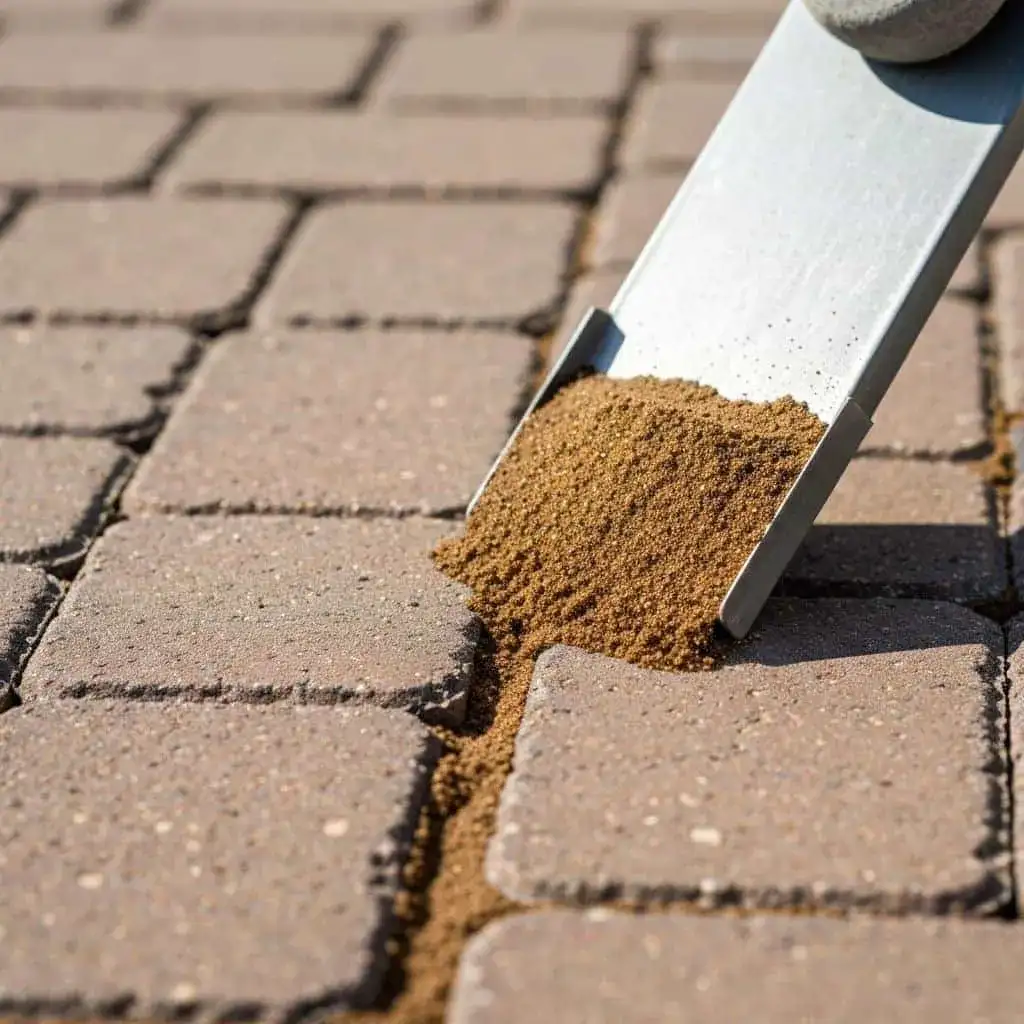
- Apply the Sand: Pour the sand onto the pavers and use a broom to distribute it evenly into the joints.
- Activate the Polymer: Lightly mist the surface with water to activate the polymer binder. Avoid overwatering, as this can wash away the sand.
- Compact the Sand: Use a plate compactor or a hand tamper to compact the sand firmly into the joints.
- Clean Up: Once the sand has dried, sweep away the remaining sand from the surface of the pavers.
Regular Dry Sand and Its Uses in Hardscaping
Free Estimate · No Obligation
Ready to transform your pavers?
Same-week scheduling available across South Florida.
While polymeric sand offers enhanced benefits, regular dry paver joint sand still has its place in hardscaping. It's a cost-effective option for projects where advanced features like weed and insect resistance aren't as critical. Regular dry sand is commonly used as a bedding layer creating a stable base for pavers, as a joint filler for the gaps between pavers, and as a top dressing around landscape features. Commercial grade dry sand is carefully screened and washed to remove impurities, resulting in a consistent grain size and texture that ensures optimal drainage and compaction.
When and Where to Use Regular Pavers Joint Sand
Regular dry sand is suitable for areas with moderate foot traffic and minimal exposure to extreme weather conditions. It's perfect for garden pathways or patio areas where the charm of natural settling over time is desired. For areas near the coast where salty air and frequent rains are part of daily life, regular dry sand offers an easy-to-maintain option. It's especially recommended for pool decks and areas between clay bricks where water drainage and natural aesthetics are priorities.
Expert Tips for Achieving Professional-Quality Results
To achieve a professionally finished look, preparation and patience are key. Ensure the base is well-compacted and level before laying your pavers. After applying the sand, a gentle misting — rather than a heavy watering — will help the sand settle without washing it away. When working with pavers, use a leaf blower angled so it doesn't blow the sand out of the joints but rather helps remove excess dust and debris from the surface.
Staining issues can mar the beauty of your pavers. To avoid this, ensure the paver joint sand is dry before application and avoid overwatering during the settling process. After applying sand to your pavers, allow adequate time for it to settle and dry before exposing the area to traffic. Consider applying a sealer to protect the sand from washing out and to enhance the color and durability of your pavers.
Making the Right Choice for Your Project
Choosing the right sand for your paver project involves considering the specific challenges posed by your local climate. Regular dry sand offers an economical and aesthetically pleasing option for areas with moderate traffic and exposure, while polymeric sand provides superior performance in challenging conditions. When selecting sand, consider the joint size, weather conditions, and your aesthetic preferences. The right sand not only secures your pavers but also complements their design, elevating the beauty of your outdoor areas.