Pavers with grass in between stand out because they combine the strength of concrete with the natural charm of grass. You get a unique surface that absorbs rainwater, reduces runoff, and cools the area around your home. Many homeowners choose these pavers to add outdoor beauty and support eco-friendly landscaping.
Key Features
Permeability
Open-cell pavers with grass in between create highly permeable surfaces. Water flows through the gaps between pavers and seeps into the ground below. This design mimics how natural land absorbs rainwater, reducing stormwater runoff and lowering the risk of flooding. The layered stone base beneath the pavers filters and stores water, which can replace traditional stormwater systems like catch basins.
Visual Appeal
Pavers with grass in between offer a unique look that stands out in any landscape. You can create bold patterns, such as checkerboard or grid layouts, that add dimension and texture to your yard. Popular design trends include checkerboard patios with alternating green and stone squares, stepping stone walkways that combine function and nature, geometric patterns using hexagonal or diamond-shaped pavers, and circular patios that break away from traditional shapes.
Eco-Friendly
Open-cell pavers support eco-friendly landscaping. These permeable surfaces allow rainwater to filter through the soil, reducing runoff and soil erosion. The grass in the gap helps cool the area, lowering the urban heat island effect. You can choose grass pavers made from recycled plastic or concrete, both of which offer environmental benefits.
Low Maintenance
Open-cell pavers with grass in between require less maintenance than traditional lawns or paved surfaces. If you use artificial grass in the gap, you avoid mowing, watering, or fertilizing. Synthetic turf stays green all year and saves water. Both artificial grass and concrete pavers handle heavy foot traffic and weather without much wear.
Installation Guide
Base Preparation
Free Estimate · No Obligation
Ready to transform your pavers?
Same-week scheduling available across South Florida.
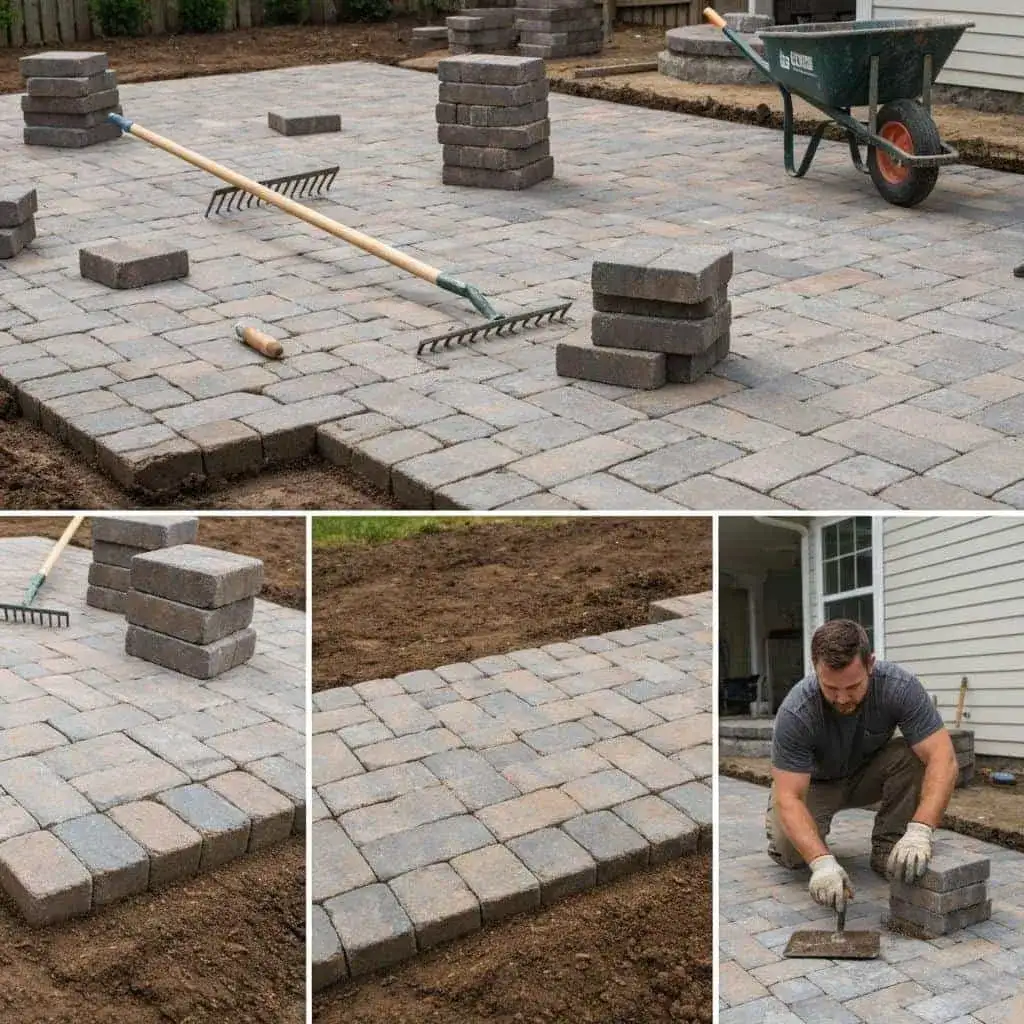
Mark your area using stakes and string. Excavate to the required depth—at least 4 inches for patios and walkways, 6-10 inches for driveways. Compact the soil with a plate compactor. Add a layer of crushed gravel or decomposed granite to aid in drainage. Create a gentle slope of 1-2% away from buildings to facilitate water runoff. Never use plastic sheeting under the base—it traps water and leads to problems.
Laying and Finishing
Use paver spacers to ensure uniformity. Use a diamond blade wet saw for precise cuts. Secure edges with plastic or metal paver edgers anchored by spikes to prevent movement. Sweep polymeric sand into the joints, then mist with water to set the sand.
Planting Grass or Groundcover
After laying pavers, clean the gaps and tamp down the soil. Choose a grass or groundcover that matches your climate and light conditions. Creeping thyme, Irish moss, and dwarf mondo grass work well for different zones. For shaded areas, consider baby's tears or sweet woodruff. Fill the gaps with soil or compost, then plant seeds, plugs, or sod.
Material Choices
Concrete pavers are the most common choice because they balance durability, cost, and easy installation. They usually last 25–50 years with proper care. Natural stone pavers give a beautiful look and high durability but cost more and need sealing. Porcelain pavers are durable and easy to clean. Brick pavers offer a classic style but require more maintenance.
Benefits Summary
- Improve drainage by letting water soak into the ground, reducing flooding and soil erosion
- Create a cooler, greener outdoor space that blends natural beauty with strong, durable surfaces
- Lower maintenance needs and save water compared to traditional lawns
- Support eco-friendly landscaping by filtering pollutants and reducing heat around your home
- Can increase property value by up to 10% in some markets