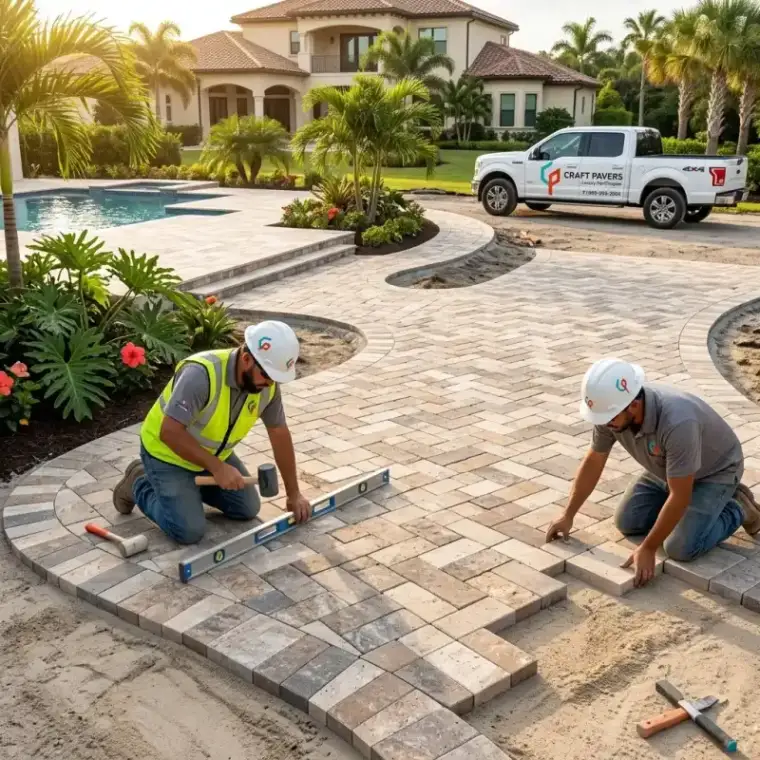
Pool Deck Pavers South Florida
Travertine, porcelain & concrete pool deck pavers — slip-resistant, cool-touch, and built for Florida's chlorine exposure, salt air, and UV index 11–12. From $17/sq ft installed. Permits and HOA handling included.
The Physics Behind Travertine's Cool Surface
Travertine's micro-porous structure creates thousands of microscopic air pockets that dissipate thermal energy rather than storing it. This isn't marketing — it's measurable: surface temperature tests in direct South Florida midday sun consistently show travertine running 20–30°F cooler than poured concrete and 15–20°F cooler than porcelain.
For barefoot pool deck use in Florida's 90°F+ summer heat, this difference determines whether your family uses the pool deck or avoids it between 10am and 4pm.
~95°F
Travertine
Direct noon sun, South Florida summer
~108°F
Porcelain (light)
Same conditions, lighter colorways
~120°F
Poured Concrete
Same conditions, mid-gray finish
~135°F+
Dark Concrete
Same conditions, darker finish
Pool Deck Paver Materials for Florida's Climate
Pool deck material selection must account for slip-resistance, thermal comfort, pool chemical compatibility, and coastal UV — not just appearance.
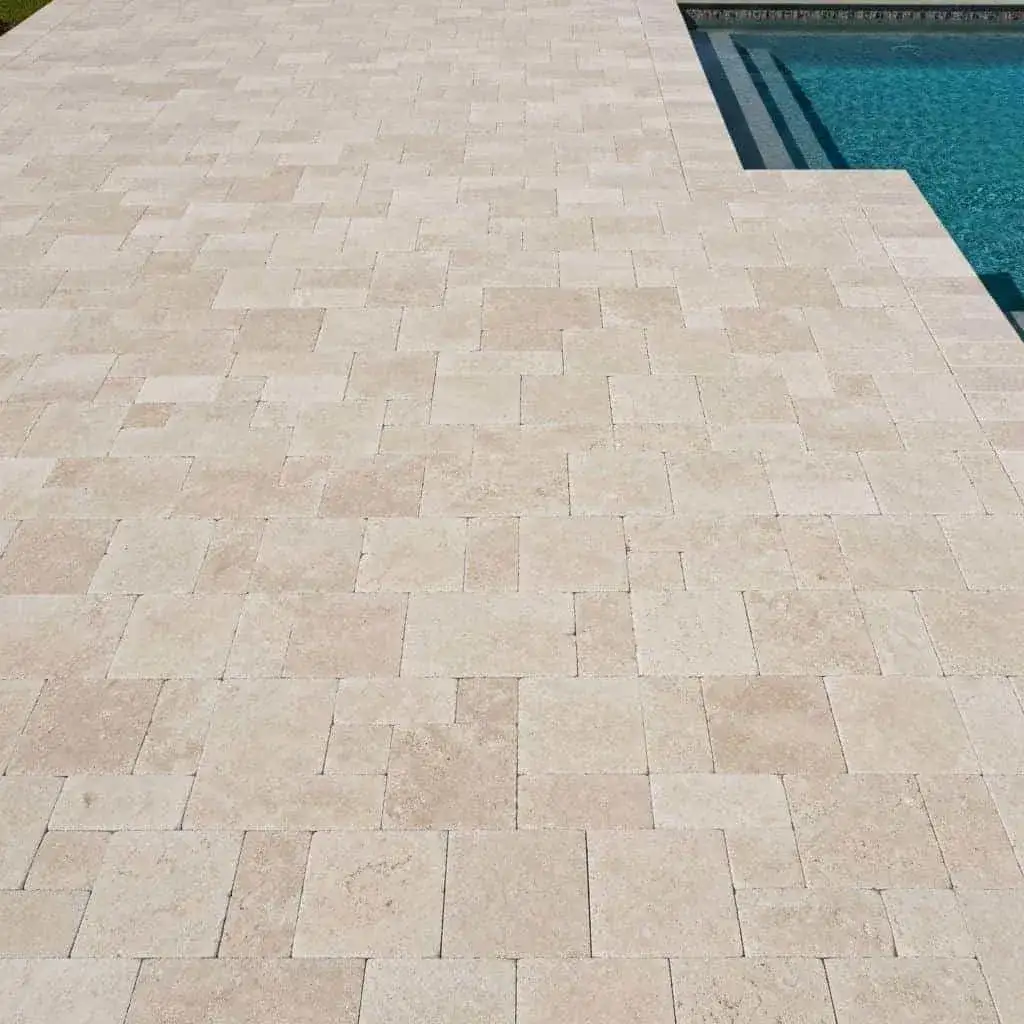 South Florida Standard · From $17/sq ft
 Travertine Pool Deck Pavers
The Engineering-Correct Choice for Florida Pool Decks
Travertine's natural porous microstructure dissipates heat rather than storing it — a measurable physical property that makes it the correct material for South Florida pool decks, not merely a stylistic preference.
- Surface stays 20–30°F cooler than poured concrete in direct South Florida midday sun
- Brushed and tumbled finishes: DCOF 0.65+ — exceeds ADA wet-surface slip-resistance requirements
- Naturally compatible with pool chemistry — does not degrade from chlorine splash or salt air when sealed
- Coastal properties: 18–24-month sealing cycle. Inland: 3-year cycle. Written schedule included.
- Creates seamless visual flow with interior marble and stone for high-end estate aesthetics
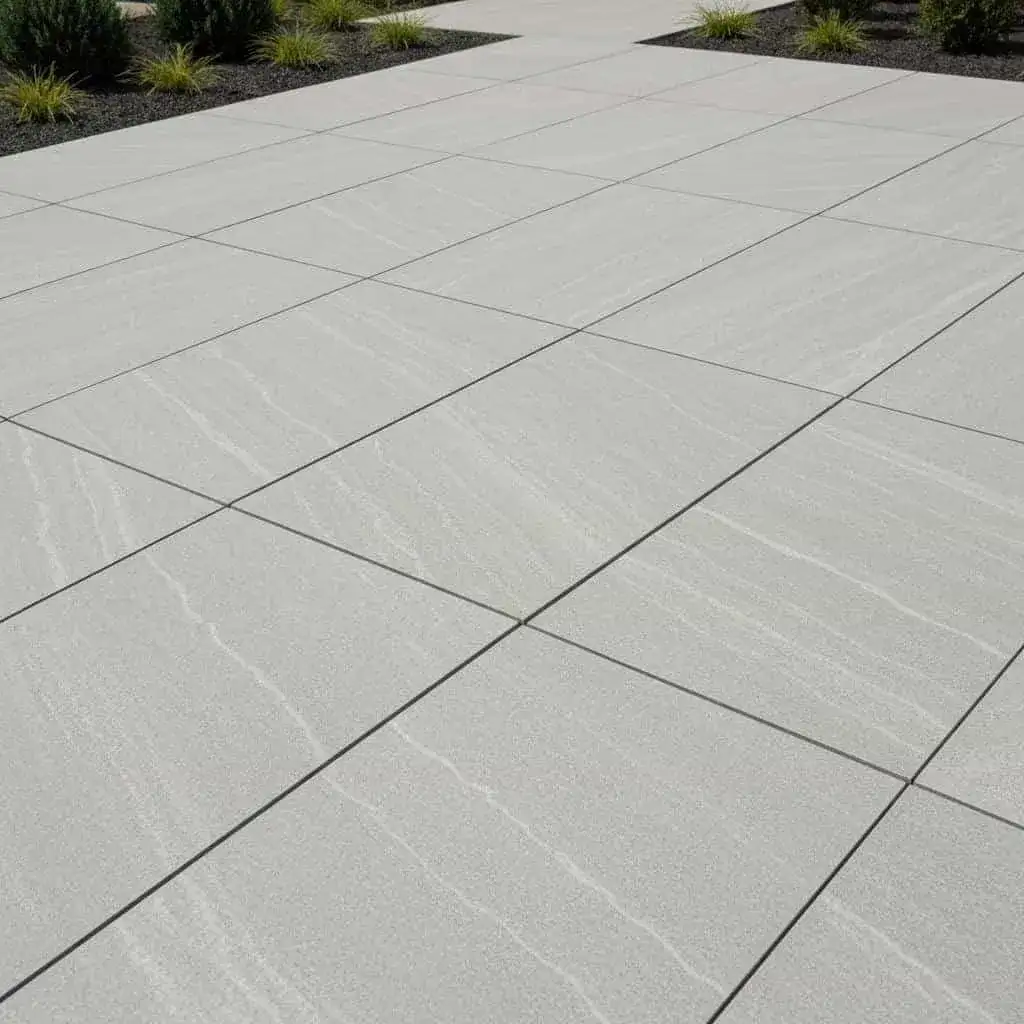 Zero Maintenance · From $20/sq ft
 Porcelain Pool Deck Pavers
Non-Porous. No Sealer Required. Maximum Durability.
Fired at 2,200°F, porcelain pavers achieve zero porosity — no sealer required for chemical protection, no fading under Florida's UV index 11–12, and no foothold for South Florida's mold and algae spores.
- Non-porous surface: chlorine splash, tannins, rust, and algae cannot penetrate without sealing
- UV index 11–12 rated: kiln-fired pigmentation does not fade under Florida's extreme sun
- Available in large-format slabs (up to 48"×48") for contemporary pool deck aesthetics
- Textured surface specification achieves DCOF 0.65+ for ADA-compliant wet-surface traction
- Lowest long-term maintenance cost of any pool deck material — no mandatory sealing cycle
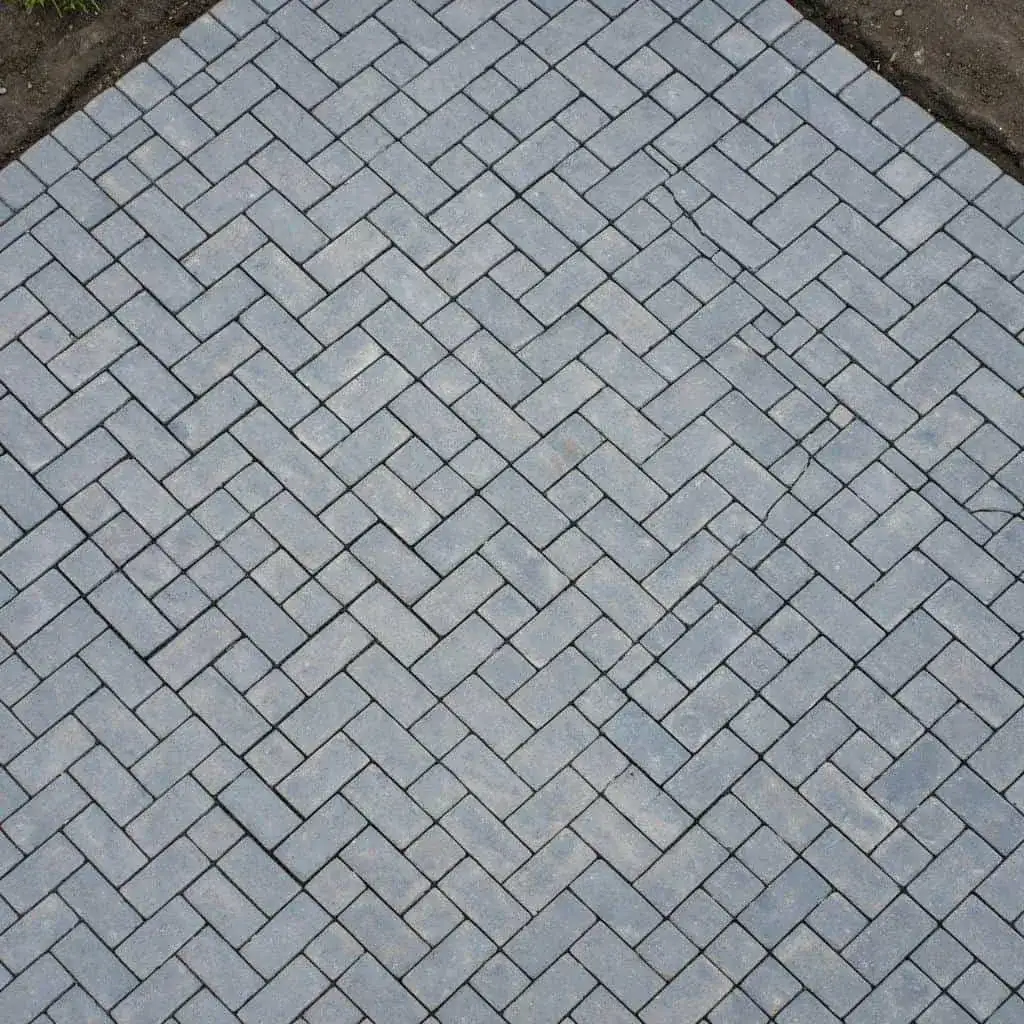 Value Option · From $14/sq ft
 Concrete Pool Deck Pavers
Cost-Effective. HOA-Friendly. Durable.
Interlocking concrete pavers are the cost-effective pool deck solution for budget-conscious renovations and HOA communities where matching an existing concrete aesthetic is required.
- ASTM C936-rated: 8,000+ PSI compressive strength for long-term durability
- Individual units can be lifted for pool plumbing access — no saw-cutting or concrete disposal
- Permeable concrete paver option available for flood-zone pool deck areas with drainage requirements
- Wide color range to match HOA-governed community aesthetic guidelines
- Sealed concrete pool decks: reseal every 2–3 years near pool equipment areas
Pool Deck Paver Installation Process
Pool deck installations require additional drainage engineering, chemical compatibility planning, and sealing coordination that standard paver projects don't. Every step accounts for the pool environment.
On-Site Assessment & Pool Drainage Planning
We evaluate pool surround geometry, existing drainage outlets, pool equipment pad location, HOA requirements, and coastal exposure. Drainage slope is engineered away from pool equipment and home foundation — critical on South Florida's flat topography.
HOA ARC & Permit Handling
Pool deck modifications typically require both HOA ARC approval and a building permit in governed communities. ARC application prepared first (scope, scaled drawing, material specs, contractor license, COI). Permit filed after written ARC approval — the legally correct sequence.
Base Preparation & Pool Surround Engineering
Compacted limestone aggregate base (4–6" for pool decks) with geotextile separation fabric. Precise drainage slope graded away from pool equipment pad, home foundation, and all electrical panels. Expansion joints and edge restraints set before any paver is laid.
Paver Installation, Sealing Schedule & Chemical Compatibility
Pattern laid with consistent joint spacing. Marine-grade or standard polymeric compound by coastal zone. Final compaction. First seal scheduled at 4–6 weeks post-installation after efflorescence dissipation. Written sealing schedule and pool chemical compatibility guide included.
Pool Deck Paver Cost in South Florida
Installed price includes sub-grade preparation, compacted base, bedding sand, paver laying, joint compound, edge restraints, cleanup, and first sealing appointment at 4–6 weeks.
| Material | Installed / sq ft | Best For | Sealing Cycle |
|---|---|---|---|
| Travertine | $17 – $28 | All pool decks — the thermal and slip-resistance standard for South Florida | 18 mo (coastal) · 3 yr (inland) |
| Porcelain | $20 – $32 | Contemporary pools, zero-maintenance homeowners, modern aesthetics | None required (surface) |
| Concrete Pavers | $14 – $22 | Budget-conscious pool deck renovations, HOA communities | 2–3 years |
First sealing appointment included on all full pool deck installations. Coastal properties add marine-grade joint compound (~$0.30–$0.50/sq ft). Permit fees and HOA application prep included in full estimates.
Which Pool Deck Paver Is Right for You?
| Travertine | Porcelain | Concrete Pavers | |
|---|---|---|---|
| Installed cost / sq ft | $17–$28 | $20–$32 | $14–$22 |
| Barefoot comfort at noon | Coolest — 20–30°F under concrete | Hot in dark colors, fine in light | Hottest, especially dark colors |
| Wet slip (DCOF) | 0.65+ brushed/tumbled | 0.65+ textured spec only | Good with textured finish |
| Pool chemicals & salt | Compatible when sealed | Immune — zero porosity | Good when sealed |
| Maintenance | Seal 18 mo–3 yr | None required | Seal every 2–3 yr |
| Choose it for | Barefoot comfort, natural stone estates | Modern design, zero upkeep | Budget builds, HOA color matching |
Don't forget the waterline: pool decks pair with pool coping — a separate structural element we install as one system with the deck. Deeper reading: travertine vs porcelain · installation cost guide · sealer finishes for pool decks.
Pool Deck Paver Questions Answered
What is the best material for pool deck pavers in South Florida?
How much do pool deck pavers cost in South Florida?
Are travertine pool deck pavers slippery when wet?
How long after pool deck paver installation can I use the pool?
Do pool deck pavers need to be sealed in Florida?
Can pool deck pavers be installed over existing concrete in Florida?
How do pool deck pavers handle pool chemicals and Florida sun?
What is the coolest paver for a pool deck in Florida?
What size pavers are best for a pool deck?
Do I need special coping for a paver pool deck?
How long does a paver pool deck last in Florida?
Should I resurface my concrete pool deck or replace it with pavers?
More Paver Installation Services
Paver Installation →
Complete guide to all paver installation types, materials, and processes in South Florida.
Driveway Pavers →
Concrete, travertine & porcelain driveway pavers from $12/sq ft — engineered for Florida's sandy soil and vehicle traffic.
Paver Sealing →
UV-resistant pool deck sealers for travertine and concrete — written sealing schedules calibrated to your coastal zone.
Ready for a New Pool Deck?
Free on-site estimate. All permits and HOA packages handled. First sealing included. Itemized written quote within 24 hours. No quote-from-photos.